
December 17, 2025
If you and your family are working full-time, but you have a loved one who needs regular care, you already know the problem: emergencies don’t wait for you or your family to be ready.
- A fall can happen at 1:30pm.
- Medication can be forgotten after lunch.
- Low blood sugar or high blood sugar could lead to an emergency room visit.
- A parent living with dementia/Alzheimer’s may wander mid-morning.
And even relatively minor accidents during the weekday hours can quickly become unsafe and stressful parts of the week for you and your family.
That’s where our Maryland, DC, and Northern Virginia Weekday Senior Home Care Program comes in. It’s a personalized way to bridge the gap when you can’t be there between 8am-6pm, without forcing your family into an all-or-nothing decision.
In this guide, we’ll explain:
- Who weekday care is created for
- What daytime senior home care can include
- The difference between medical and non-medical home care
- How to determine which home care services are right for your loved one
- Common schedules families use
- Planning resources you can save and use today: a Weekday Care Coverage Planner
- How to get started quickly
Who This Is For: Working Families Who Can’t Be There During the Day
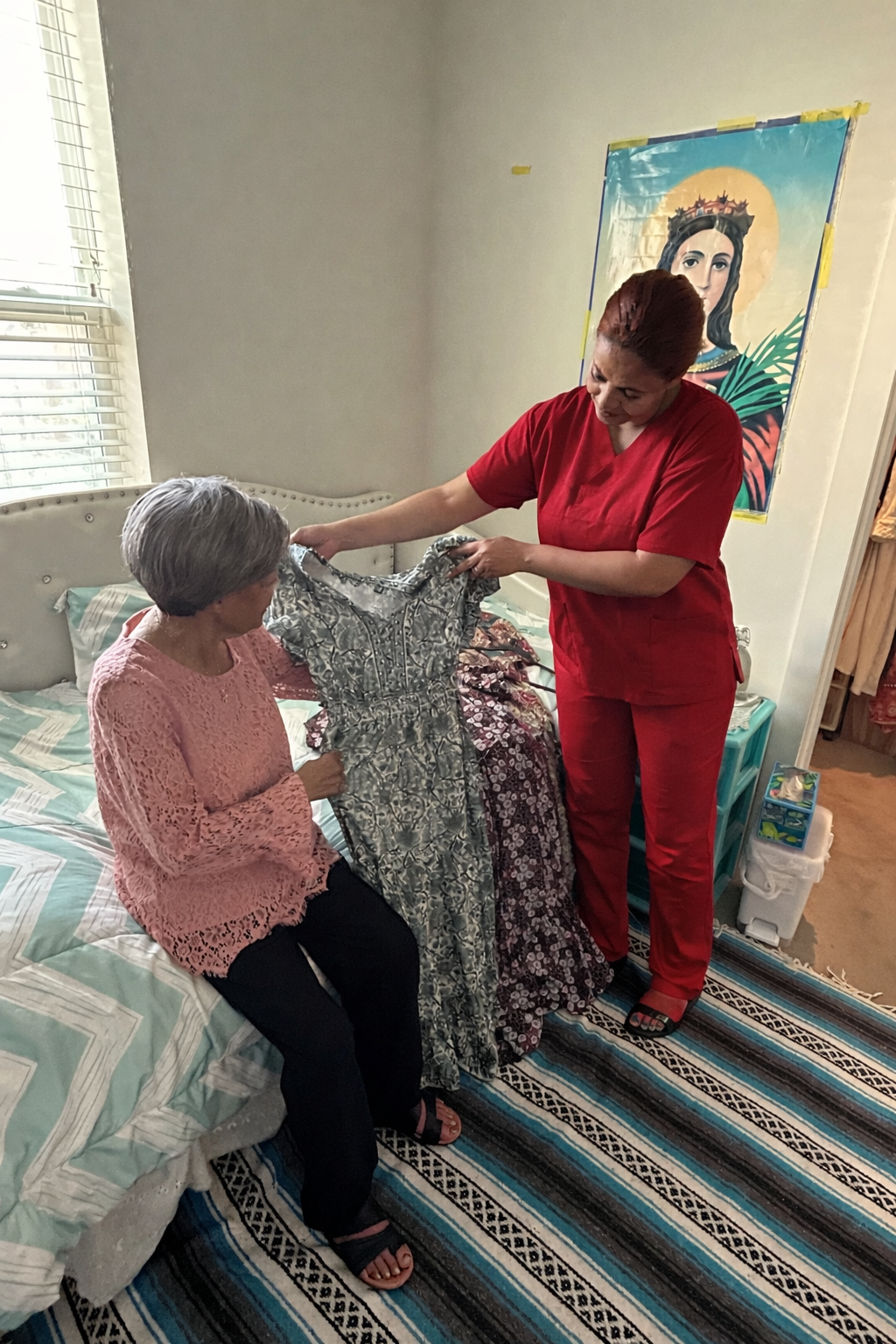
Weekday care is best for families who have:
- Full-time work, commuting, and kids
- A loved one who needs help with Day-to-Day Tasks
- A loved one you’re concerned may fall, can’t drive safely, or is at risk of hurting themselves
- A loved one who was recently hospitalized or discharged from rehab
- A senior who is lonely, anxious, or depressed during the day
- A parent who is “mostly okay” but has gaps in safety
Many families tell us the same thing:
“Even if my loved one is doing well at night, I worry about them between breakfast and dinner.”
That’s the window where home care during the day can make the biggest difference.
What Weekday Senior Home Care Includes
The goal of senior care during working hours is safe, supported days with the right level of help for your loved one’s needs.
1. Help With Day-to-Day Activities
These are the basic tasks our caregivers assist with. These often become harder with age, pain, weakness, or cognitive changes:
- Bathing and hygiene
- Dressing and grooming
- Toileting and continence support
- Eating and hydration reminders
- Transfers (bed-to-chair, chair-to-stand) and safe movement
2. Mobility Support + Fall Prevention
Falls are one of the biggest weekday risks, especially when a senior is alone or doesn’t have the correct support.
Daytime home care often includes:
- Safe walking assistance and standby support
- Home safety cues (clear pathways, good lighting, shoes vs. socks)
- Gentle movement and supervised activity
- Support with stairs
Preventing falls requires supervision and routines. The right weekday coverage can reduce risks like rushing to the bathroom, stepping in and out of vehicles, or carrying laundry.
3. Meal Prep, Nutrition Support, and Hydration
Daytime caregivers can help with:
- Meal prep and simple cooking
- Grocery planning & shopping support
- Encouraging hydration (which reduces dizziness and confusion)
- Monitoring appetite changes and flagging concerns to family
4. Companionship and Cognitive Support
Isolation is a legitimate mental health concern during weekdays, and can accelerate the deterioration of pre-existing mental health conditions. Daytime support can include:
- Conversation and companionship
- Walks or light activities
- Reading together, puzzles, music, reminiscence activities
- Routine-building for seniors who feel anxious when alone
For families managing memory loss with dementia/Alzheimer’s, companionship is also supervision: a calm presence to reduce agitation, wandering, and confusion.
5. Transportation and Errands
Weekday care can include:
- Rides to appointments
- Help getting ready and safely into/out of the car
- Pharmacy pickup, groceries, light errands
Click here to ask us about transportation availability in
your area and what’s included.
Common Weekday Schedules Families Use
Weekday care is flexible, and based around your schedule. Most families don’t start with “all day, every day.” They start with coverage during the riskiest hours.
Here are common setups:
Standard Workday Coverage:
For families who are away and cannot return home during working hours
- 8:00 a.m. – 5:00 p.m. (overlaps with typical work schedules)
- 9:00 a.m. – 6:00 p.m. (full weekday coverage)
Half-Day Coverage:
For families who have support in the morning or afternoon, or who have a loved one who only needs assistance for part of the day.
- Option 1: 8:00 a.m. – 12:00 p.m. (morning routine + breakfast + shower + safety check)
- Option 2: 12:00 p.m. – 4:00 p.m. (lunch + hydration + supervision + activities)
Split Shifts:
For families where morning and late afternoons require the most support.
- 8:00 a.m. – 11:00 a.m. +
3:00 p.m. – 6:00 p.m.
Great when mornings and late afternoons are the hardest times.
Check-In Visits (Respite Care):
For Families with loved ones that are mostly independent, but would benefit from occasional support. This can work for higher-independence seniors who mainly need structure and oversight.
- Short visits for meals, reminders, light support, and safety check-ins
Many families start with:
4-6 hours/day, 3–5 weekdays/week, then make adjustments depending on your loved one's reassessments.
Before care starts, your loved one will go through an initial assessment with our Registered Nurses. This assessment will help us determine:
- How many hours per day your loved one needs care
- How many days per week are ideal
- Which specific services would be most effective
- Expectations for care
Non-Medical Home Care vs. Home Nursing
Families often search “home health care agency” to find their weekday help at home. With home health, there are two broad categories:
1. Non-Medical Home Care (Caregiver / Aide Support)
Typically focused on:
- Day-to-day task support
- Meal prep
- Mobility support
- Companionship, routine help, safety supervision
- Medication reminders
2. Home Nursing & In-Home Medical Care
Often appropriate for:
- Medical and healthcare needs or higher medical complexity
- Post-acute situations where nursing oversight is required
- Ongoing clinical monitoring (within scope and orders)
- Multiple conditions where a nurse-led plan is necessary
At Specialty Care Services we offer both home health aides and in-home medical care, so we can match families with their personalized level of care.
During your loved one’s initial assessment, we can determine which care would be most appropriate for them, and develop a customized care plan built to enhance their comfort and wellbeing.
Adult Day Care vs In-Home Care: What Families Compare (And When Each Fits)
Families often weigh adult day services against weekday senior home care. Both can be valuable, but they fit different needs.
Adult Day Care (During the Weekday)
This is best for:
- Your loved one has simple and generic care needs
- Seniors who enjoy group social time
- Families who can easily transport their loved one to and from day care
- Individuals who do well in group settings
In-Home Weekday Care
This is most effective for:
- Seniors who want or need to stay at home
- Families who want or need to avoid infections or diseases from group activities
- Families who want 1-on-1 attention and supervision
- Mobility limitations that make transport difficult
- Dementia/Alzheimer’s where familiar settings reduce agitation
- Privacy needs and concerns
- Your loved one’s comfort and wellbeing is the highest priority
Easy-to-Read Comparison of In-Home Care & Adult Day Care:
| Feature | In-Home Care | Adult Day Care |
|---|---|---|
| Setting | Private home | Group program |
| Supervision | 1:1 (often) | Group-based |
| Flexible (can include outings) | High | |
| Transportation burden | On caregiver | Usually on family |
| Amount of disruption | Low | High |
| Privacy | High | Low |
| This is best for: | Those looking for safety & comfort with a personalized plan | Social seniors with simple and minimal needs |
A Tool You Can Save: Weekday Care Coverage Planner (Checklist)
Here is a Weekday Coverage Planner (and checklist) you can use to determine your loved one’s exact needs, and determine if and how an in-home care agency can help them:
Work schedule coverage
- Coverage needed: [START TIME] – [END TIME]
- Days needed: [MON–FR / SPECIFIC DAYS]
- Commute buffer needed? [YES/NO]
Safety & Risks: If your loved one has one or more of these, in-home care can be extremely helpful during workday hours.
- Fall risk / unsteady walking
- Stairs in home
- Wandering risk (memory loss)
- Needs help with toileting
- Lives alone during weekdays
- Has had a fall or ER visit in last 6 months
Daily needs
- Bathing / hygiene
- Dressing
- Meal prep and reminders
- Hydration reminders
- Light housekeeping for safety (tidy walkways)
- Companionship / anxiety support
- Transportation to appointments
Medication routine (scope-compliant)
- Medication reminders needed
- Family handles setup (pill organizer)
- Escalation if missed doses: [CALL WHO?]
Emergency contacts
- Primary contact: [NAME + PHONE]
- Backup contact: [NAME + PHONE]
- Preferred hospital: [HOSPITAL]
- Physician office: [NAME + PHONE]
Once you complete this, feel free to send it to us: info@SpecialityCareServices.com.
Getting Started: A Simple Step-by-Step
Here’s the typical process for setting up weekday senior home care:
1. Quick initial phone call (10–15 minutes)
We get an understanding of you and your loved one’s goals, schedule, medical history, and needs.
2. Initial assessment
We provide an in-home assessment (where your loved one is most comfortable) to determine their current capabilities, develop a personalized care plan that meets their medical, personal, and wellbeing needs, and set expectations. We also determine a schedule that works for everyone.
3. Match caregiver or nurse
We match a caregiver to your loved one based on preferences, personality, schedule, and skill needs. Our caregiver selection is flexible, and can be based on your and your loved one’s preferences.
4. Your loved one receives care consistently
We deliver your loved one’s care, have regular check-ins with our Registered Nurses, and refine your loved one’s care plan based on their needs.
Ready to start? Call 301-585-6300 or request a consult to schedule your complimentary in-home assessment.