February 18, 2026
Stroke Recovery at Home in Bethesda, MD: How In-Home Nursing and Home Health Aides Support Rehab
If you are helping a parent, spouse, or loved one recover from a stroke at home in Bethesda, MD, (or anywhere in Montgomery County, MD) or you’re currently struggling with mobility, bathing, communication, or rehab routines after discharge, this article is for you. [1][2][3]
Coming home after a stroke can feel hopeful, but it can also be overwhelming. Stroke recovery often affects walking, balance, dressing, bathing, speech, swallowing, memory, and the ability to manage normal daily routines. The American Stroke Association explains that daily activities can become much harder after a stroke because of weakness, numbness, paralysis, communication challenges, vision changes, and neglect. MedlinePlus also notes that many stroke survivors need help with safety, home setup, and adaptive equipment once they return home. [1][2][3]
For many families in Bethesda, the goal is to help a loved one recover as safely and independently as possible while reducing stress on family caregivers. That is where in-home nursing, a home health aide, and other forms of home health care can play an important role. [2][4][5]
In this blog, we’ll explain:
- Who May Need Stroke Recovery Support at Home in Bethesda, MD
- How a Stroke Can Affect Daily Life at Home
- Why the First Days Home After a Stroke Are So Important – And Why You May Need In-Home Care
- How In-Home Care Supports Stroke Recovery at Home
- How to Keep our Loved One Safe with Mobility, Fall Prevention, and Home Safety After Stroke
- How In-Home Support Helps Family Caregivers, Too
- Local Stroke Recovery Resources
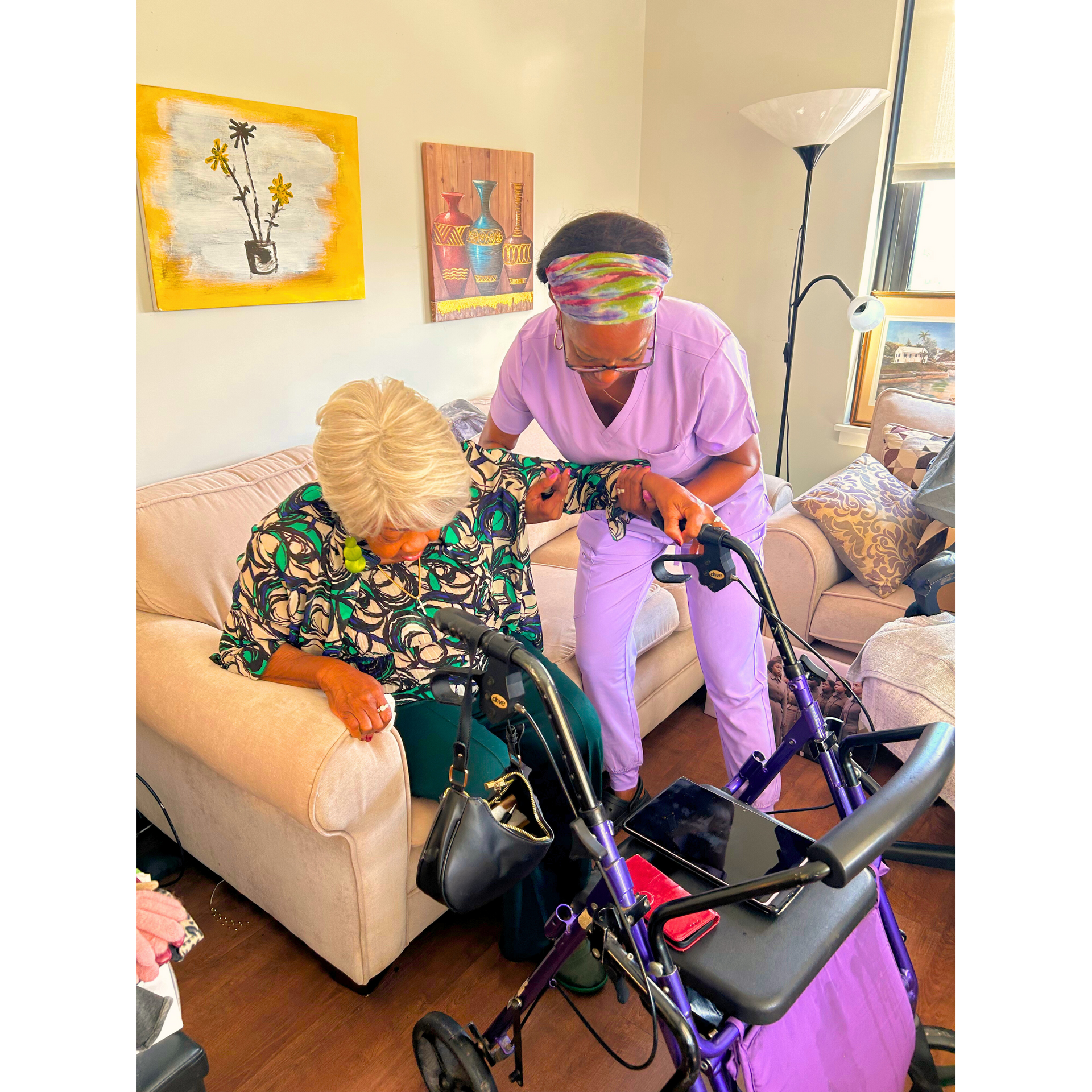
Who May Need Stroke Recovery Support at Home in Bethesda, MD
Not every stroke survivor needs the same kind of home support, but certain situations make in-home care more likely to help. These include living alone, needing help with bathing or dressing, unsafe walking, trouble managing meals or medications, fatigue, speech or swallowing issues, cognitive changes, or a family caregiver who cannot be present all day. Stroke resources make clear that many people continue recovering for months or years and that many are able to function and live at home with the right support. [7][11]
For some people, support is mostly non-medical and task-based. For others, the right fit may include home nursing or private duty nursing alongside therapy and family help. The decision should be based on function, safety, and medical needs rather than on whichever search term the family happened to use.
How a Stroke Can Affect Daily Life at Home
A stroke can change daily life in ways that families do not fully appreciate until their loved one is back home. Some survivors have weakness on one side of the body. Others have fatigue, trouble using an arm or hand, difficulty speaking, swallowing issues, or slowed thinking. The American Stroke Association’s daily living guidance explains that getting dressed, making meals, doing laundry, and staying organized may all become much harder after a stroke. [1]
In practical terms, that can mean a person needs help:
- standing up from a chair
- getting into the shower
- walking across a room
- preparing food
- following instructions that used to feel simple
MedlinePlus states that stroke rehabilitation may include physical therapy for movement and coordination, occupational therapy for bathing and dressing, speech-language therapy for communication and swallowing, and cognitive therapy for memory and decision-making. [5]
This is one reason stroke recovery at home requires more than occasional check-ins. Even when therapy is part of the care plan, most of life still happens outside formal therapy sessions. Families often need support with the daily tasks that connect rehab goals to real life. The Life After Stroke Guide from the American Stroke Association notes that inpatient rehabilitation helps a patient become safe enough to return home, but it does not address every functional and rehabilitation need the person will continue to have. [6]
Why the First Days Home After a Stroke Are So Important
The first days and weeks after discharge are often the most fragile part of the recovery process. The hospital or rehab facility may have set up a plan, but families still have to make that plan work in the home. [3]
This is also when families realize how much supervision and hands-on help may be needed. A person may look stable in a clinical setting but struggle at home with transfers, toileting, bathing, fatigue, meal preparation, or safe walking. [7]
How In-Home Nursing Supports Stroke Recovery at Home
In-home nursing can be valuable when a stroke survivor has medical needs that require licensed clinical oversight. Depending on the care plan, this may include medication-related support, monitoring health changes, helping the family understand post-discharge instructions, and reinforcing the recovery plan. [4]
For some families, home nursing is especially helpful after a recent hospitalization, when there are still medical concerns layered on top of the rehab process. A person may be managing blood pressure changes, new medications, swallowing precautions, or complications tied to mobility and deconditioning. In those situations, in-home nursing can complement therapy and family caregiving by keeping recovery organized and medically safer. [4][5]
This is also where search terms often overlap. Some families will search for home nursing, private duty nursing, or a home health care agency because they are trying to understand what level of support is appropriate. Others are really looking for daily-living help but use the phrase home health care broadly. Medicare and NIA both distinguish skilled services from non-skilled personal care, which is why these terms are frequently mixed together in real-world searches. [4]
How a Home Health Aide Helps with Daily Activities After a Stroke
A home health aide or in-home caregiver often supports the parts of stroke recovery that happen hour by hour. That can include help with bathing, dressing, toileting, meal setup, walking short distances safely, and keeping the day structured. NIA notes that services for older adults at home can include assistance with health and daily living needs, and stroke organizations emphasize that daily tasks often need to be relearned or adapted after stroke. [1][4]
This kind of help matters because rehab is not only about formal exercises. It is also about how a person gets out of bed, brushes their teeth, changes clothes, moves to the bathroom, manages meals, and conserves energy.
For some families, this falls under senior home care. For others, especially when there are long-term disabilities or younger adults with post-stroke limitations, families may compare broader categories like disabled home care or special needs home care. The key issue is not the label. It is whether the service helps the person function more safely and successfully at home.
How to Keep our Loved One Safe with Mobility, Fall Prevention, and Home Safety After Stroke
Mobility and fall prevention are among the most practical and most searched concerns after a stroke. Stroke.org’s home modification resources state that if a survivor is dealing with mobility and balance issues, home modifications can make the return home safer and more comfortable. [8][9]
The home may need changes to reduce fall risk, including removing tripping hazards, improving access to the bed and bathroom, and using adaptive devices for bathing, dressing, eating, and moving around the home. [2] We help with all of these required tasks, increasing safety and comfort for post-stroke patients.
In practical terms, our in-home support can help with:
- safer transfers in and out of bed or chairs
- assistance walking through the home
- bathing and toilet safety
- fatigue monitoring
- reducing clutter and risky movement
- helping the survivor avoid overexertion during basic tasks
This is where a home health aide can make a major difference, especially during mornings, evenings, and bathing times when falls are more likely.
How In-Home Support Helps Family Caregivers, Too
Family members are often juggling work, transportation, home responsibilities, and emotional strain while also trying to learn new care routines. NIA’s caregiving resources emphasize that families often arrange in-home services, equipment, and support when a loved one needs help living safely at home. [4]
Even a few hours of consistent support can give a spouse or adult child time to work, rest, handle errands, or simply breathe. That respite can make recovery more sustainable over the long term. This is especially true in Bethesda and the surrounding Montgomery County area, where family caregivers are often coordinating care while living in separate households or balancing multiple responsibilities.
Frequently Asked Questions
Can stroke recovery support at home be temporary?
Yes. Some people only need short-term help after hospital or rehab discharge while they regain strength and adjust to new routines. Others need longer-term support depending on mobility, cognition, and caregiver availability.
Does a home caregiver replace physical, occupational, or speech therapy?
No. Therapy and in-home support usually do different things. Therapy focuses on rehabilitation goals and clinical progress, while in-home care helps the person function more safely in everyday life between visits.
Can someone receive stroke-related help at home if they live in an apartment, condo, or senior community?
Yes. Many people recover at home in a variety of living settings, not only in single-family houses. The main question is whether the space is safe, accessible, and compatible with the person’s care needs.
Is stroke home care only for older adults?
No. Stroke is more common in older adults, but younger adults can also need help at home after a stroke. In those cases, families may still look into home health care, disabled home care, or special needs home care depending on the survivor’s functional limitations and recovery plan.
Stroke recovery at home in Bethesda, MD is about much more than simply being discharged. It is about helping a survivor rebuild function, stay safe, continue rehab between visits, and manage daily life in a way that supports progress rather than setbacks.
Depending on the situation, that support may involve a home health aide, broader home health care, a home health care agency, senior home care, home nursing, or private duty nursing. The best plan is the one that matches the person’s real needs at home and helps the family create a safer, more consistent recovery routine.
At Specialty Care Services, we provide the essential at-home support for post-stroke patients to make sure they are safe, comfortable, and have the highest level of healthcare at home for their recovery. This decreases rehospitalizations, decreases patient recovery time, and decreases stress and worry of both patients and their family members.
External Sources
- American Stroke Association.
https://www.stroke.org/en/life-after-stroke/recovery/daily-living
Accessed April 2026. - MedlinePlus.
https://medlineplus.gov/ency/article/007419.htm
Accessed April 2026. - MedlinePlus.
https://medlineplus.gov/ency/patientinstructions/000132.htm
Accessed April 2026. - National Institute on Aging.
https://www.nia.nih.gov/health/caregiving/services-older-adults-living-home
Accessed April 2026. - MedlinePlus.
https://medlineplus.gov/strokerehabilitation.html
Accessed April 2026. - American Stroke Association.
https://www.stroke.org/en/-/media/Stroke-Files/life-after-stroke/Life-After-Stroke-Guide_7819.pdf
Accessed April 2026. - American Stroke Association.
https://www.stroke.org/en/help-and-support/resource-library/lets-talk-about-stroke/living-at-home-after-stroke
Accessed April 2026. - American Stroke Association.
https://www.stroke.org/en/life-after-stroke/recovery/home-modifications
Accessed April 2026. - American Stroke Association.
https://www.stroke.org/en/life-after-stroke/recovery/home-modifications/make-your-home-work-for-you-moving-around-the-house
Accessed April 2026. - National Institute on Aging.
https://www.nia.nih.gov/health/brain-health/cognitive-health-and-older-adults
Accessed April 2026. - MedlinePlus.
https://medlineplus.gov/ency/article/000726.htm
Accessed April 2026. - Montgomery County, Maryland.
https://www.montgomerycountymd.gov/HHS-Program/Resources/Files/A%26D%20Docs/VND/VNDAssistLivHomeCare.pdf
Accessed April 2026. - Montgomery County, Maryland.
https://www.montgomerycountymd.gov/HHS-Program/Resources/Files/2022%20CoA%20Annual%20Report.pdf
Accessed April 2026. - Montgomery County, Maryland.
https://www.montgomerycountymd.gov/HHS-Program/Resources/Files/A%26D%20Docs/TransportationOptionsforSeniorsandPWD.pdf
Accessed April 2026.