
March 4, 2026
Parkinson’s In-Home Care in Montgomery County, MD: Help with Mobility, Tremors, and Daily Tasks
If you are caring for a parent, spouse, or loved one with Parkinson’s disease in Montgomery County, MD, or struggling with mobility changes, tremors, and everyday tasks at home, this article is for you. [1][2]
Parkinson’s disease can affect far more than movement alone. It often changes how a person walks, balances, dresses, bathes, eats, gets in and out of bed, manages medication, and moves safely through the home. Tremors, stiffness, slowness of movement, freezing episodes, fatigue, and balance problems can all make normal routines more difficult over time. [1][2][3]
For many families, the goal is helping a loved one stay safe, preserve dignity, and remain at home as long as possible with the right level of support. That is where Parkinson’s in-home care can make a meaningful difference. In Montgomery County, many families look for senior home care, home health care, or even a trusted home health care agency when Parkinson’s symptoms begin to affect daily life. [2][3][4]
In this article, we'll explain:
- The Major Signs & Symptoms of Parkinson's
- Signs It May Be Time to Consider Parkinson’s Home Care
- How Caregivers Help with Tremors and Fine-Motor Tasks
- How Caregivers Support Dressing, Bathing, Toileting, Grooming, and Meals
- How to Choose the Right Parkinson’s In-Home Care in Montgomery County, MD
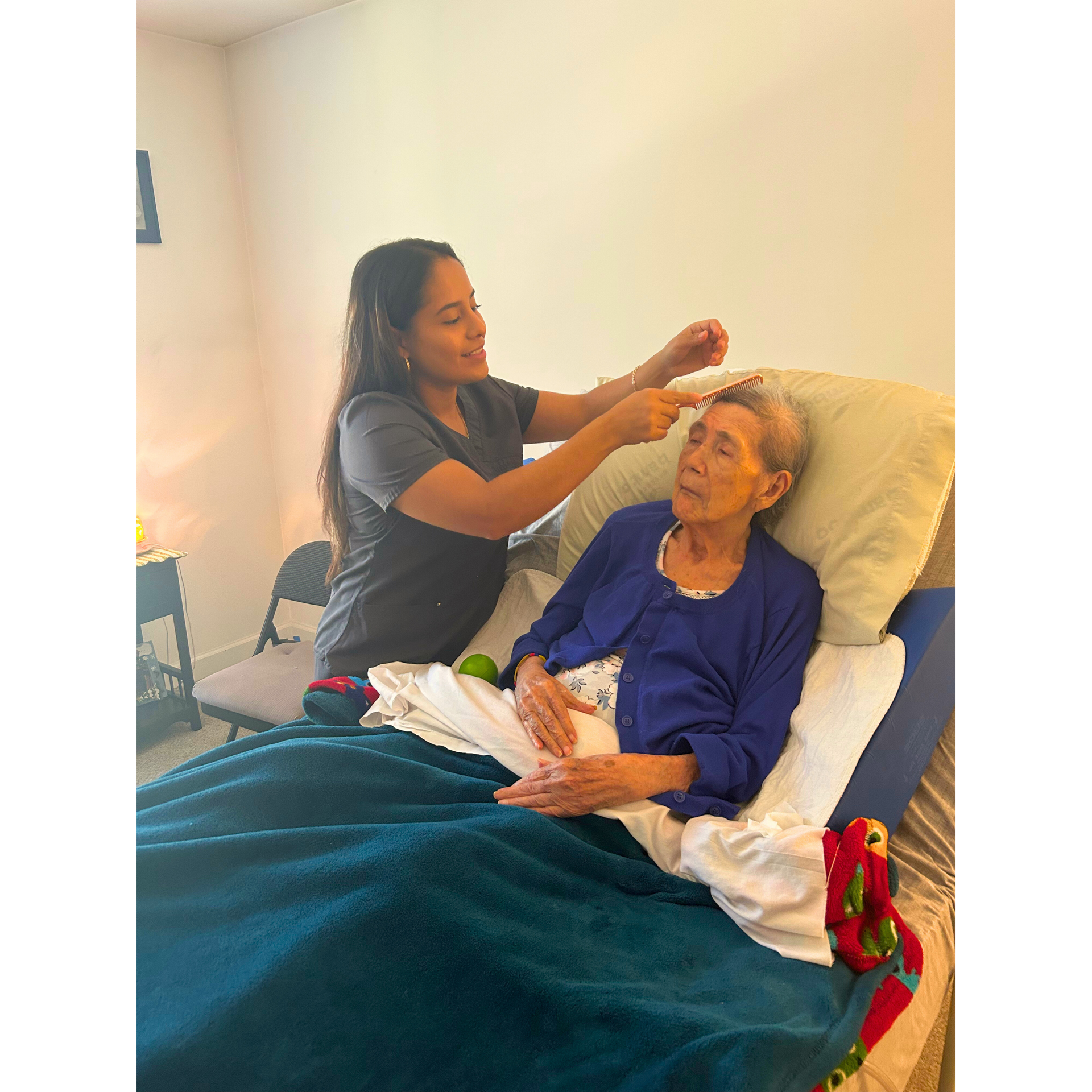
The Major Signs & Symptoms of Parkinson's
Parkinson’s disease commonly causes shaking, stiffness, slowed movement, and difficulty with balance and coordination. Those symptoms may sound simple on paper, but at home they can lead to very real challenges: taking longer to get dressed, needing help in the bathroom, hesitating before walking through a doorway, losing balance during transfers, or struggling with meals and grooming. [1][2]
Many families first notice the change in small ways. A loved one may begin shuffling, avoid stairs, hold onto walls or furniture, spill drinks because of tremors, or need much longer to button clothing. Others begin having trouble keeping up with medication timing, especially if doses need to be taken on a precise schedule. These changes can gradually increase fall risk, frustration, isolation, and caregiver stress. [3][5][6]
That is why Parkinson’s care at home is often most effective when it focuses on the specific activities a person is struggling with, not just the diagnosis itself. A thoughtful care plan, like the ones we design and customize at Specialty Care Services, should look at mobility, safety, routines, personal care, meal support, and family needs as a whole. [2][3]
Signs It May Be Time to Consider Parkinson’s Home Care
Families often wait too long before bringing in support. They may assume they should wait until there is a crisis, but earlier help can reduce stress and make home life safer and more sustainable. [3][4]
It may be time to consider Parkinson’s in-home care if:
- Walking has become unsteady
- Falls or near-falls are happening more often
- Dressing or bathing now requires regular assistance
- Tremors are interfering with meals or hygiene
- A spouse or family member feels overwhelmed
- Medication is being delayed or missed
- The person is becoming more isolated at home
- Morning or nighttime routines are becoming unsafe
This is also the stage when families may broaden their search for an effective Parkinson's healthcare solution. They may begin with “Parkinson’s home care,” but also search for a home health care agency, home health care, home nursing, or private duty nursing if their loved one has additional needs beyond non-medical support. Some families also compare Parkinson’s care with broader services like disabled home care or special needs home care when functional limitations are becoming more complex. [4][7] We provide all of these services and help these populations.
How Caregivers Help with Tremors and Fine-Motor Tasks
Tremors are one of the most visible Parkinson’s symptoms, but the day-to-day impact often goes beyond shaking alone. Slowness of movement and stiffness can make hands-on tasks frustrating, tiring, and time-consuming. [1][2]
This is where Parkinson’s in-home care can become highly practical. A caregiver may help with:
- Buttoning shirts and fastening clothing
- Preparing food and opening containers
- Steadying items during meals
- Pouring drinks more safely
- Grooming tasks like shaving or brushing hair
- Organizing items so they are easier to reach and use
These tasks may sound small, but they can greatly affect confidence and independence. When people with Parkinson’s begin avoiding daily routines because they feel embarrassed, frustrated, or unsafe, quality of life often declines. Support with these daily tasks can help preserve energy for the activities that matter most. [2]
For some families, this is the point where they begin searching for home health care or disabled home care options, especially when a loved one still wants to remain at home but clearly needs more hands-on help. [2][4]
How Caregivers Support Dressing, Bathing, Toileting, Grooming, and Meals
Many people do not look for care because of the Parkinson’s diagnosis alone. They start looking when activities of daily living become harder. For many, if they started recieving care sooner, it could slow the progression of their illness.
The Parkinson’s Foundation specifically highlights daily living issues such as pill timing, bathroom routines, and other hands-on tasks that become more complicated as symptoms progress. [2]
Dressing and Grooming
Getting dressed may take much longer when balance is reduced and fingers are less nimble. A caregiver can help lay out clothes, assist with fasteners, and provide support while dressing to lower the chance of falls. Grooming may also become easier with cueing, setup help, and a consistent routine. [2]
Bathing and Bathroom Safety
Bathrooms are one of the highest-risk areas in the home for someone with Parkinson’s. Wet surfaces, narrow spaces, and transfers in and out of the shower can all become more difficult. In-home support can help by assisting with bathing, steadying movement, and reducing the chance of slips. [3]
Toileting and Nighttime Help
Rushing to the bathroom at night, standing from the toilet, or moving when tired can create extra risk. Families often underestimate how much safer a loved one can be with scheduled assistance during the most challenging times of day. [2][3]
Meals and Eating Support
Parkinson’s can make meal preparation harder, and fatigue may leave a person less able to cook or clean up. A caregiver can assist with light meal prep, setup, encouragement during meals, and routine support so a loved one does not skip meals simply because the process feels too hard. [2]
For some households, this kind of help falls under senior home care. In others, families may need more clinical support, such as home nursing or private duty nursing, depending on the person’s overall health needs and whether there are other medical concerns involved. [7] At Specialty Care Services, we can provide both forms of home healthcare and in-home care, providing Parkinson's patients and families with everything they need to stay safe, comfortable, and cared for at home.
How to Choose the Right In-Home Care Company in Montgomery County, MD
If you are comparing providers in Montgomery County, look for a company that understands both the practical and local side of care. Parkinson’s symptoms do not affect every person the same way, so a one-size-fits-all plan is rarely enough. [1][2]
A strong local care provider should be able to discuss:
- Help with mobility and fall prevention
- Support with bathing, dressing, toileting, and meals
- Medication reminders and routine consistency
- Communication with family members
- Flexible schedules, from a few hours to broader support
- Service in private homes, apartments, or senior communities
At Specialty Care Services, our patients and their families consider us the perfect in-home care for those with Parkinson's, as we can assess exactly what healthcare they need, connect our patient's with local providers and resources, and provide personalized and effective home care for those with Parkinson's.
Frequently Asked Questions About Parkinson’s In-Home Care
1. Can Parkinson’s in-home care start with just a few hours per week?
Yes. Many families begin with only a few hours a week for bathing help, meal support, transportation assistance, or respite for a spouse. Starting small can make it easier to add care gradually as needs change.
2. Can a person with Parkinson’s receive help at home if they live in an independent living or assisted living community?
Yes. In many cases, outside caregivers can provide extra one-on-one support in an apartment, independent living setting, or some assisted living environments, depending on community policies and the family’s goals.
3. What is the difference between non-medical Parkinson’s home care and skilled nursing care?
Non-medical care usually focuses on daily tasks such as bathing, dressing, mobility support, meal help, companionship, and reminders. Skilled nursing or private duty nursing typically involves licensed clinical services that go beyond routine personal care.
4. Can Parkinson’s home care also help family caregivers get a break?
Yes. Respite support is often one of the most valuable benefits of in-home care. Even a few regular hours of help can reduce stress for spouses and adult children and make long-term caregiving more sustainable.
Parkinson’s disease can make life at home harder in very specific ways: slower movement, tremors, balance problems, fatigue, and more difficulty with routine daily tasks. But with the right Parkinson’s in-home care in Montgomery County, MD, many families can create a safer and more manageable home routine while helping a loved one preserve dignity and independence. [1][2][3]
Whether you are beginning to notice subtle changes or already know your loved one needs hands-on help, the right support can make everyday life easier. A thoughtful local plan may include senior home care, a home health aide, home health care, home nursing, or private duty nursing depending on your family’s needs, goals, and clinical situation. [4][7]
If your family is looking for Parkinson’s in-home care in Montgomery County, MD, the best next step is to schedule a personalized assessment with Specialty Care Services, focused on mobility, safety, routines, and the daily tasks that are becoming hardest at home. Give us a call or fill out our contact form to request your initial assessment.
External Sources
- National Institute on Aging.
https://www.nia.nih.gov/health/parkinsons-disease/parkinsons-disease-causes-symptoms-and-treatments
Accessed April 2026. - Parkinson’s Foundation. Activities of Daily Living.
https://www.parkinson.org/resources-support/carepartners/advanced/daily-living
Accessed April 2026. - Parkinson’s Foundation. Home Safety.
https://www.parkinson.org/living-with-parkinsons/management/activities-daily-living/home-safety
Accessed April 2026. - Montgomery County, Maryland. Aging and Disability Resource Unit.
https://www.montgomerycountymd.gov/HHS-Program/ADS/ADSADSResourceUnit-p179.html
Accessed April 2026. - Parkinson’s Foundation. Managing “Off” Time in Parkinson’s.
https://www.parkinson.org/library/fact-sheets/managing-off-time
Accessed April 2026. - Parkinson’s Foundation. Episode 109: Medication Timing.
https://www.parkinson.org/library/podcast/109
Accessed April 2026. - National Institute on Aging. Health Topics A–Z.
https://www.nia.nih.gov/health
Accessed April 2026. - Montgomery County, Maryland. Caregiver Support.
https://www.montgomerycountymd.gov/disability/caregiving.html
Accessed April 2026. - Maryland Association for Parkinson Support.
https://www.marylandparkinsonsupport.org/
Accessed April 2026. - APDA Maryland Chapter.
https://www.apdaparkinson.org/community/maryland/
Accessed April 2026. - National Institute on Aging. Lewy Body Dementia: Causes, Symptoms, and Diagnosis.
https://www.nia.nih.gov/health/lewy-body-dementia/lewy-body-dementia-causes-symptoms-and-diagnosis
Accessed April 2026. - Maryland Department of Human Services. Training Resources for Caregivers.
https://dhs.maryland.gov/maryland-commission-caregiving/training-resources-caregivers/
Accessed April 2026.